
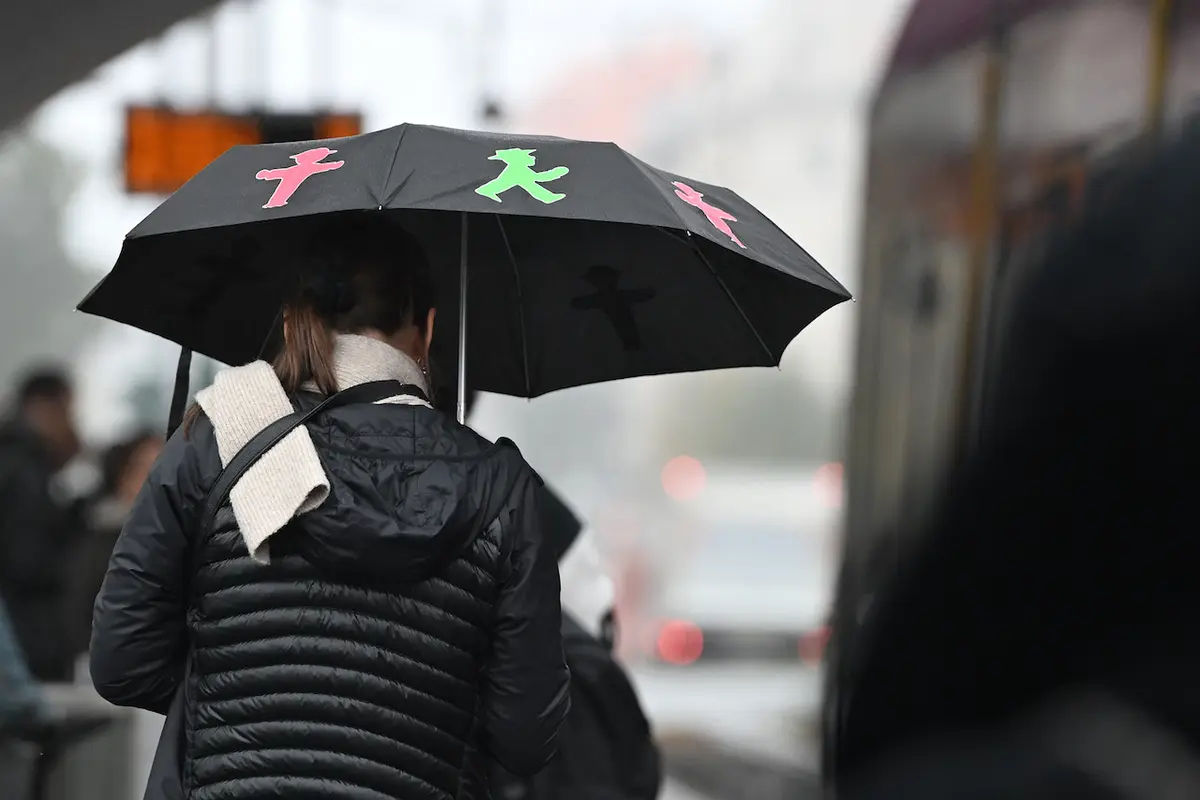
Tuesday's top story: CDU MPs vote on leaving the plenary hall during Siegmund's election in Saxony-Anhalt
The Christian Democrats (CDU) parliamentary group in Saxony-Anhalt is to vote on Tuesday about leaving the plenary hall en masse during the election of Alternative for Germany (AfD) candidate Ulrich Siegmund as Minister-President.
The move would be intended to prevent speculation about potential defections. The CDU continues to rule out supporting Siegmund.
According to recent calculations, the AfD would need three more votes to successfully elect their top-candidate as minister-president.
At least a few CDU members in Saxony-Anhalt were suspected to have voted for the far-right party's candidate for president of parliament last week when Tobias Rausch successfully won the post with four votes more than was expected.
The suspected betrayal by the CDU MPs in Saxony-Anhalt was met with anger from political leaders across Germany, including in their own party. Speaking on a televised program, CSU leader Markus Söder told any political dissenters in Saxony-Anhalt to just leave the conservative party: "Do you want to go somewhere else? Then say so. Those who vote for the AfD don't have a future with us now."
PODCAST: How Germany is grappling with far-right gains
Labour Minister abruptly resigns in latest shock to Germany's black-red government
German Labour Minister Bärbel Bas resigned from her position in the Federal Cabinet on Monday citing personal reasons related to the death of her step-daughter, as well as attacks from within the Christian Democratic Union (CDU).
She also resigned from her position as co-leader of the Social Democratic Party (SPD).
"I must unfortunately note that the public attacks against me -- regrettably including those from within the ranks of our coalition partner -- have continued to intensify during this difficult time for me personally," Bas said.
The resignation comes amid turmoil for the government, which is grappling with a sluggish economy and low poll ratings.
At the Willy Brandt House, the SPD's remaining co-leader, Lars Klingbeil, announced that a federal conference around the turn of the year would elect the party's new leadership. He left open the question of whether he will run again himself, but noted that he intends to maintain the principle of dual leadership. According to SPD rules, when the party has co-leaders at least one must be a woman.
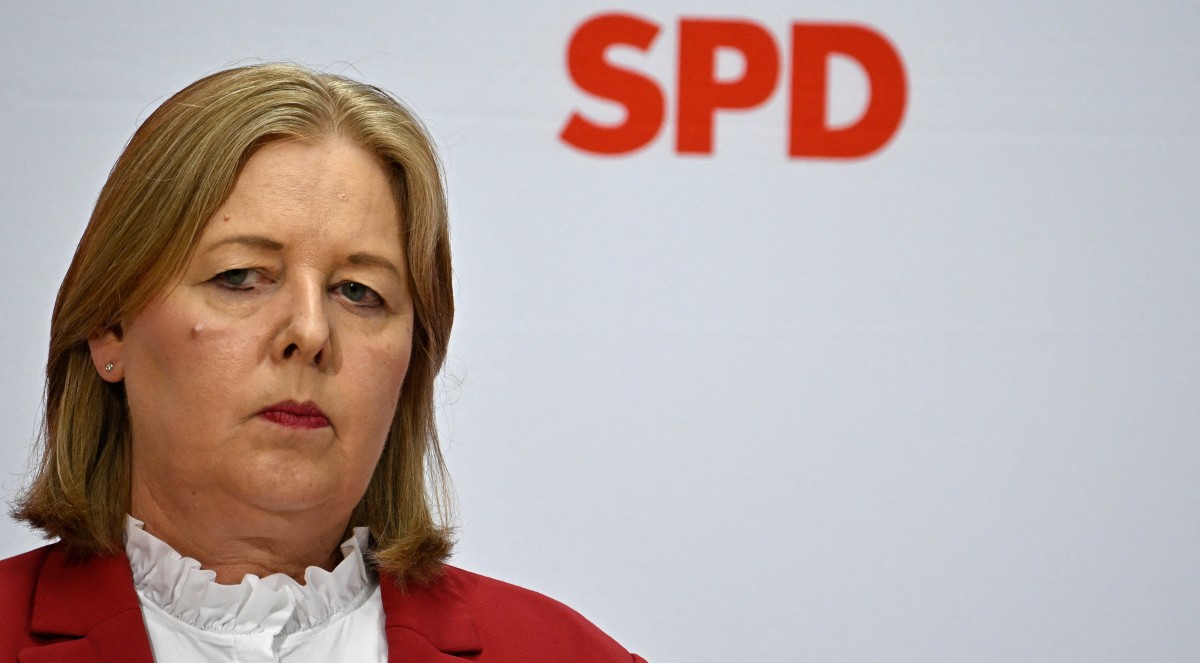
At the SPD's request, Alexander Schweitzer is slated to take Bas's place as Labour Minister. The former SPD Minister-President of Rhineland-Palatinate has long been considered for top office in Berlin.
He is regarded as a pragmatist – but whether he allows the coalition to quickly implement its planned labour and pension reforms remains to be seen.
READ ALSO: What does Germany's care reform mean for you?
Germany detains two suspects over Polish Starlink blaze
Germany detained two Turkish citizens suspected of setting fire to a Polish Starlink station, Polish Prime Minister Donald Tusk said Monday, calling the blaze last month an act of "hybrid warfare".
"On behalf of Polish services, German police detained two Turkish citizens suspected of setting fire to a Starlink station in Masovia (central Poland)," Tusk wrote on X, adding "this is another act of hybrid warfare".
He added the two suspects would "answer before the Polish justice system".
Polish interior minister Marcin Kierwinski confirmed the arrests, adding they were made possible due to collaboration between the Polish police, Poland's internal security agency (ABW) and German services.
He added the charge was "sabotage, espionage on behalf of a foreign intelligence service". A report by the German Press Agency noted that the government in Warsaw suspects the Russian intelligence services were behind the attack.
The station is used to transmit internet traffic through Poland, including to Ukraine, according to the digital affairs minister, Krzysztof Gawkowski.
Russia will only negotiate under pressure, says Merz
Meanwhile German Chancellor Friedrich Merz reaffirmed Berlin’s line on Russia, insisting that Moscow will only engage in meaningful peace negotiations if it remains under sustained political and economic pressure.
Speaking on Monday, Merz rejected any suggestion that Germany or Europe should follow the United States in easing sanctions on Russia.
His comments came days after US President Donald Trump announced a temporary arrangement allowing larger volumes of Russian diesel to reach global markets following talks with Russian President Vladimir Putin.
“For Germany and for Europe, such a decision is out of the question,” Merz said, arguing that sanctions remain an essential tool in responding to Russia’s actions in Ukraine.
The Chancellor also expressed scepticism about Moscow’s willingness to pursue peace, pointing to continued attacks on Ukrainian energy infrastructure despite reported proposals for an energy ceasefire.
READ ALSO: Russian strikes hit Kyiv while German Chancellor Merz visits
Germany’s top court weighs challenge to inheritance tax rules
Germany’s Federal Constitutional Court has begun examining a challenge by the Bavarian government to the country’s inheritance tax system, in a case that could have significant implications for homeowners and families across the country.
At the centre of the dispute is whether inheritance tax should continue to apply nationwide or be applied state by state.
Bavaria argues that current tax-free allowances, introduced in 2009, no longer reflect sharply rising property values, particularly in southern Germany.
Under existing rules, spouses can inherit up to €500,000 tax-free and children up to €400,000, with higher-value estates taxed at rates ranging from seven to 50 percent.
Supporters of the current system warn that regional tax rates could trigger competition between Germany’s federal states and undermine national cohesion. Critics also fear wealthy individuals could relocate to lower-tax regions, reducing revenues for poorer areas.
The case reflects a broader European debate over wealth taxation and inheritance. Several countries have faced growing pressure to balance rising property values with concerns over fairness, social mobility and public finances.
While no ruling is expected for several months, the Karlsruhe proceedings could influence future discussions on inheritance and wealth taxes across Europe.
East Germany's unique 'traffic light man' turns 65
Berlin's iconic traffic light figure, known by his German name the Ampelmännchen, celebrates his 65th birthday on Tuesday.
The green and red traffic light man is arguably among East Germany's most widely recognised symbols that still exists commonly on many German streets today.
On October 13th, 1961, traffic psychologist Karl Peglau presented his designs for new traffic light symbols to the East Berlin Ministry of Transport.
Thus the Ampelmännchen was born, and from then he continued to shape the cityscape of the socialist state for decades.
In the years following reunification, the friendly little man became a cult figure – in Germany and beyond. Its rather slender pictogram counterpart in the West never achieved nearly the same popularity and has since been replaced in places by its East German counterpart.
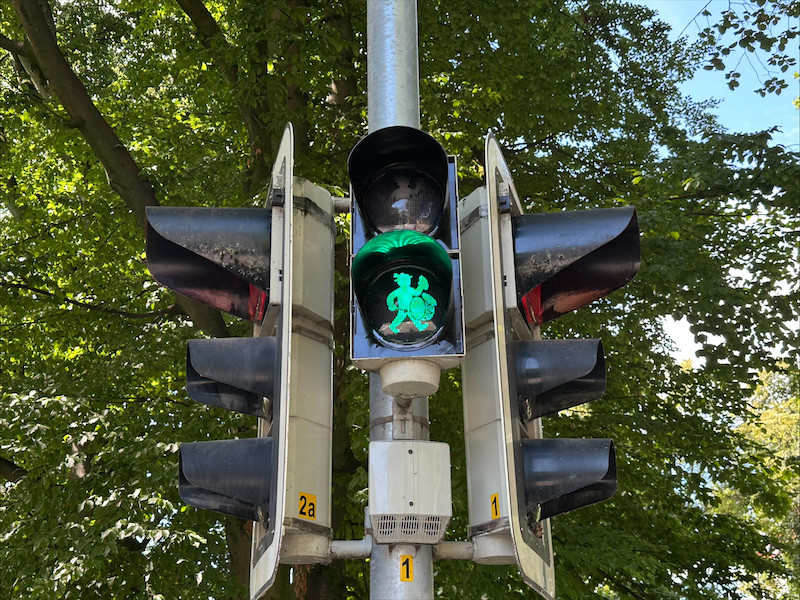
The proposal to add a traffic light woman never really took off. But some cities have taken inspiration from the East's unique traffic signal design and launched their own charaters to celebrate local symbols.
Throughout Germany, traffic lights are now teeming with countless television stars, comic book characters, and all sorts of figures from legend and history.
With reporting by AFP, DPA and Tom Pugh.
Comments